Creatine for Women Over 40: Benefits, Safety and What the Science Says
Estimated Reading Time: 6.5 minutes
Many women I work with are lifting weights for the first time in their 40s and 50s. They’re focused on strength, longevity and staying sharp, rather than aesthetics. Inevitably, the question comes up:
“Should I be taking creatine?”
Creatine has long been associated with bodybuilding and sports performance, but a growing body of research suggests it may also have relevance for women in midlife.
This article explores what creatine actually is, why it may matter during menopause, and what the scientific evidence says about its benefits and safety.
What Creatine Actually Is

Creatine regenerates your body's natural energy source - ATP
Creatine has been used by athletes and gym-goers for decades to enhance training performance, and it is one of the most extensively researched supplements in the world.
But what exactly is creatine?
Creatine is a naturally occurring compound produced in the body and also obtained in small amounts from foods such as meat and fish. It is stored primarily in skeletal muscle, although smaller amounts are also present in the brain.
Its main role is to help regenerate energy.
Think of it like this:
Your train is arriving, and you start running to catch it.
You’re about to perform a deadlift and brace to lift the bar.
The fuel used during the first few seconds of these movements is adenosine triphosphate (ATP) — the body’s most immediate source of energy.
When ATP releases energy, it breaks down into smaller molecules. Creatine helps rapidly regenerate ATP, allowing energy to be reused during short bursts of effort.
In simple terms, creatine helps maintain energy availability in muscles and the brain — supporting physical performance, training adaptations and cellular energy balance.
Why Midlife Changes the Equation
Many of the women I work with experience menopause-related changes such as brain fog, sleep disruption, reduced muscle mass and changes in body composition.
These shifts raise an interesting question: could creatine play a useful role during this stage of life?
Women generally have lower baseline creatine stores than men, and hormonal changes across the lifespan may influence how creatine is synthesised and used in the body (Smith-Ryan et al., 2021).
During midlife, several physiological changes occur that may make energy metabolism particularly important.
Muscle Loss Accelerates After Menopause
Muscle is a metabolically active tissue and the primary storage site for creatine in the body.
During menopause, women experience a faster rate of muscle loss and strength decline. This process, sometimes referred to as sarcopenia, can contribute to:
increased body fat
reduced metabolic health
weaker bones
lower physical resilience
Maintaining muscle mass through resistance training becomes increasingly important during this stage of life.
Changes in Energy, Recovery and Mood
Many menopausal women report disrupted sleep due to night sweats, hormonal fluctuations or stress. Poor sleep can worsen:
fatigue
food cravings
mood fluctuations
recovery from exercise
The hormonal and metabolic changes that occur during perimenopause and menopause can also increase physiological stress and slow recovery from training or injury.

Creatine is increasingly being discussed in relation to midlife women’s health.
Cognitive Load and “Brain Fog”
The brain is an energy-intensive organ, requiring a continuous supply of fuel to function effectively.
During midlife, some women experience cognitive changes such as forgetfulness, slower processing speed or what is often described as “brain fog.”
Emerging research suggests that menopause may influence glucose metabolism and mitochondrial function, potentially affecting how efficiently the brain produces energy.
If brain energy supply becomes less efficient, it may contribute to symptoms such as:
reduced mental clarity
slower reaction time
mood changes
increased feelings of overwhelm
Together, these changes help explain why creatine — a compound involved in cellular energy metabolism — is increasingly being discussed in relation to midlife women’s health.
Creatine Benefits for Women: What the Research Says
Research Highlights: Creatine in Midlife Women
Several high-quality studies and reviews have examined the effects of creatine supplementation in women, particularly during aging and menopause.
Key findings from the scientific literature include:
Strength and muscle mass: Creatine supplementation combined with resistance training consistently improves strength and lean muscle mass in older and post-menopausal women (Gotshalk et al., 2007; Stares & Bains, 2020).
Bone health: Long-term studies suggest creatine combined with resistance training may help slow bone loss at the hip in post-menopausal women, although creatine alone does not appear to significantly increase bone mineral density (Chilibeck et al., 2023; Sales et al., 2020).
Cognitive function: Emerging evidence suggests creatine may support aspects of cognitive function such as reaction time, attention and memory, particularly under conditions of sleep loss, stress or aging (Smith-Ryan et al., 2021; Xu et al., 2024).
Safety: A systematic review of 29 female-only trials involving more than 900 women found no increased risk of adverse events, kidney issues or other serious side effects when creatine was taken at typical doses (3–5 g/day) (De Guingand et al., 2020).
Strength of the Evidence
Overall, the strongest evidence for creatine supplementation relates to improvements in muscle strength and lean mass when combined with resistance training. Multiple randomised controlled trials and systematic reviews support these findings in older adults and post-menopausal women.
Evidence for bone health benefits is moderate, with some long-term studies suggesting creatine combined with resistance training may help slow bone loss at the hip.
Research into cognitive function, mood and fatigue is emerging and promising, but currently more limited and inconsistent. Larger trials in peri- and post-menopausal women are still needed.
Overall, creatine appears to be a safe adjunct to resistance training with well-supported benefits for muscle health and emerging evidence for broader metabolic and cognitive effects.
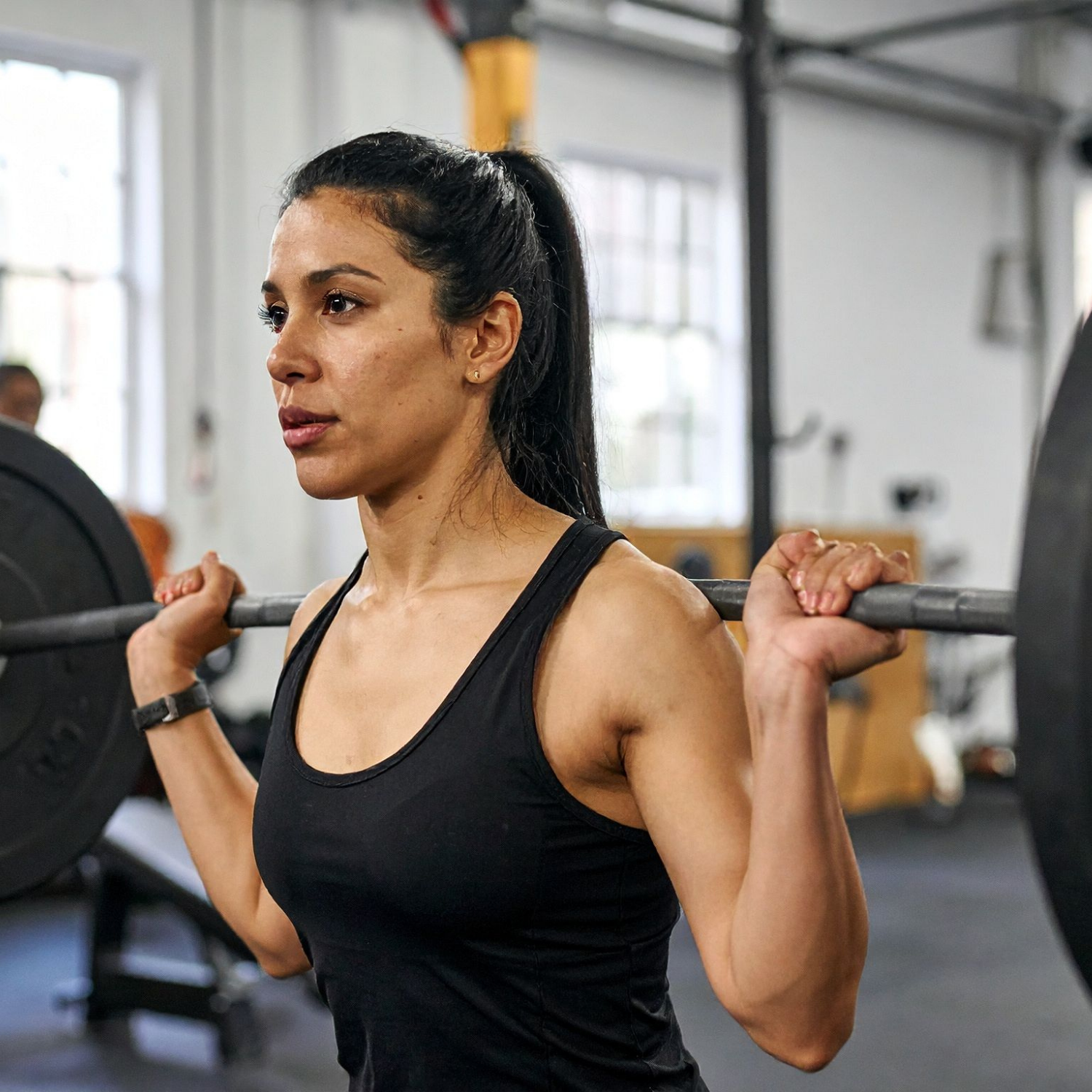
Creatine supplementation may support increases in strength (when used in conjunction with strength training), recovery, and cognitive function.
Strength, Lean Mass and Bone Health
Because creatine supports rapid ATP regeneration, it may enhance the adaptations gained from resistance training.
Research in post-menopausal women suggests that creatine supplementation combined with strength training can lead to:
greater increases in strength
improved lean muscle mass
improved functional performance
Some longer-term studies also suggest that creatine, when combined with resistance training, may help support bone health and hip strength, which could be relevant for fracture prevention.
Energy and Recovery
As a compound involved in cellular energy metabolism, creatine may also support recovery and fatigue resistance.
Some studies suggest creatine supplementation may:
increase blood flow within muscle tissue
support lipid mobilisation
improve perceived fatigue
These effects may contribute to improved training capacity and recovery over time.
Cognitive Function
Research into creatine and brain health is still developing, but early findings are promising.
A number of reviews and meta-analyses suggest that creatine supplementation may:
support mood and mental resilience
improve aspects of cognitive function such as memory and attention
enhance performance when brain energy demand is high (for example, during sleep deprivation or stress)
These benefits appear to be modest and domain-specific, rather than broad improvements in overall cognition.
Is Creatine Safe?
Kidney Health
Safety is one of the most common concerns people raise about creatine.
A systematic review of 29 female-only clinical trials found that typical creatine doses (3–5 g per day) were safe in healthy women, including older adults, with no increase in serious adverse events or side effects (De Guingand et al., 2020).
However, creatine may not be suitable for women who:
have kidney disease
take nephrotoxic medications
have certain metabolic or liver conditions
If this applies to you, it’s important to seek medical advice before taking creatine.
Some confusion arises because blood tests measure creatinine, a breakdown product of creatine. Supplementation can slightly increase creatinine levels, which does not necessarily indicate kidney damage.
Does Creatine Cause Weight Gain?
Creatine can cause a small increase in body weight, typically around 1–2 kg.
This increase is primarily due to water being drawn into muscle cells, which is a normal physiological effect of creatine.
This is not fat gain.
In fact, improvements in strength training may also increase lean muscle mass, which can contribute to small changes on the scale.
Hormones and Hair Loss
Some women worry that creatine may cause hair loss.
At present, there is no strong evidence linking creatine supplementation to hair loss in women.
Hair loss in midlife is more commonly associated with:
hormonal changes
genetics
stress
nutritional deficiencies
Creatine Side Effects
Creatine is generally well-tolerated.
In some cases, people may experience mild digestive discomfort, particularly when taking large doses at once.
Splitting the dose or taking creatine with food may reduce this effect.
How Much Creatine Should Women Take?
Most research studies use 3–5 grams per day of creatine.
Some athletes use a short “loading phase” with higher doses for a few days, but this is not necessary for most people.
Consistency is more important than timing.
The most studied form is creatine monohydrate, and micronised forms may improve digestive comfort.
Does Brand Matter?
When choosing a creatine supplement, the two most important factors are purity and quality control.
The ingredient should ideally be creatine monohydrate with no unnecessary additives.
Look for products that include:
independent third-party testing
GMP manufacturing standards
transparent sourcing
Some manufacturers highlight European or German production standards, although high-quality creatine is also produced in other regions.
Creatine: The Bigger Picture
Creatine has become increasingly popular in recent years, particularly as awareness grows around strength training and metabolic health in midlife women.
However, it’s important to remember that creatine is not a magic solution.
It works best as part of a broader approach that includes:
regular resistance training
adequate protein intake
good sleep habits
sufficient vitamin D
overall metabolic health
Supporting muscle health in midlife is not simply about aesthetics - it is fundamental to metabolic health, functional independence and long-term wellbeing.
Summary
Creatine is one of the most researched supplements available.
Evidence supports its role in improving strength and muscle adaptations, particularly when combined with resistance training.
Emerging research suggests creatine may also play a role in cognitive function, fatigue and metabolic health, although more research is needed in these areas.
For healthy women in midlife who are engaging in strength training, creatine may be worth discussing with a healthcare professional.
Midlife does not have to be a period of inevitable decline. It can be a time to build resilience.
Supporting muscle and cellular energy is part of that conversation.
This article summarises current research on creatine supplementation and women’s health. It is intended for educational purposes and does not replace personalised medical advice.
References
Antonio, J. et al. (2021) ‘Common questions and misconceptions about creatine supplementation: what does the scientific evidence really show?’, Journal of the International Society of Sports Nutrition, 18.
Chilibeck, P. et al. (2023) ‘A 2-year randomized controlled trial on creatine supplementation during exercise for postmenopausal bone health’, Medicine & Science in Sports & Exercise, 55.
De Guingand, D. et al. (2020) ‘Risk of adverse outcomes in females taking oral creatine monohydrate: a systematic review and meta-analysis’, Nutrients, 12.
Gotshalk, L. et al. (2007) ‘Creatine supplementation improves muscular performance in older women’, European Journal of Applied Physiology, 102.
Sales, L. et al. (2020) ‘Creatine supplementation and bone health in older women: a randomized controlled trial’, Journal of Gerontology Series A, 75.
Smith-Ryan, A. et al. (2021) ‘Creatine supplementation in women’s health: a lifespan perspective’, Nutrients, 13.
Smith-Ryan, A. et al. (2025) ‘Creatine in women’s health: bridging the gap from menstruation through pregnancy to menopause’, Journal of the International Society of Sports Nutrition, 22.
Xu, C. et al. (2024) ‘The effects of creatine supplementation on cognitive function in adults: a systematic review and meta-analysis’, Frontiers in Nutrition, 11.
More Posts on Menopause